Barrel-Fill Experience ROI: A Data-Driven Guide for Craft Distilleries

Updated: May 19
Craft distilleries across the country are discovering that barrel-fill and bottle-your-own (BYO) experiences are among the highest-margin revenue streams available in the tasting room. This guide examines the economics, operational logistics, and regulatory landscape to help you evaluate whether this experience format is right for your distillery.
What Is a Barrel-Fill or Bottle-Your-Own Experience?
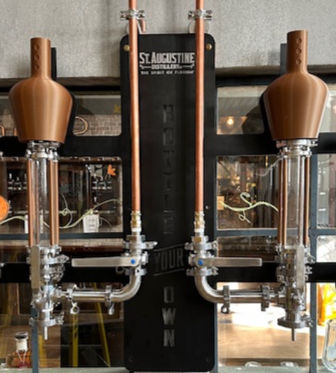
A barrel-fill or bottle-your-own experience is a guided distillery activity in which guests personally fill a bottle of whiskey directly from a selected aging barrel. The experience typically follows a structured sequence: guests select which barrel they fill from (assuming there are options), use a specialized filling apparatus to draw whiskey directly from the barrel, then cork, and hand-label their bottle before taking it home.
These experiences typically last 30 minutes and are priced as premium add-ons to standard distillery tours. Pricing varies by market and bottle size, but most distilleries charge between $80 and $200 per guest—with many in tourist-heavy markets commanding the higher end of that range.
Revenue Potential: Real Numbers from the Field
The revenue impact of a well-run bottle-your-own program can be substantial. Blaum Brothers Distilling Co. in Galena, Illinois reported $13,000 in revenue from their barrel-fill experience in their first month of operation. Other notable distilleries running successful barrel-fill programs include St. Augustine Distillery (FL), Nelson's Green Brier (Nashville, TN), and Bendt Distilling (TX).
At a typical price point of $100 per guest and an experience capacity of 6–8 guests per session, a distillery running two sessions per day, five days a week generates roughly $24,000–$32,000 per month in experience revenue alone.
The ROI Math: How Fast Does Equipment Pay for Itself?
Purpose-built barrel-fill equipment is designed specifically for distillery tasting room use. Based on reported distillery performance data, most operations recover the full cost of the equipment within 60 days of launch. In cases like Blaum Brothers Distilling, the payback period was effectively less than one month.
The math is straightforward: if equipment costs $3,500 and each experience session generates $500–$1,000 in revenue, you need only a modest number of sessions to reach breakeven. This makes barrel-fill equipment one of the fastest-payback capital investments available to a craft distillery that already operates a tasting room with visitor traffic.
TTB Compliance Considerations for Tasting Room Experiences
Compliance is a legitimate concern for distilleries evaluating barrel-fill programs. The key regulatory framework in the United States is administered by the Alcohol and Tobacco Tax and Trade Bureau (TTB). Several critical compliance points apply to bottle-your-own experiences:
Bonded premises requirement: All filling activity must take place within the distillery's bonded premises (DSP — Distilled Spirits Plant), not in the public tasting room. Equipment must be positioned in the production area where spirit transfers are legally authorized under your DSP permit.
Labeling requirements: Each bottle must comply with TTB's Certificate of Label Approval (COLA) requirements, or qualify under TTB's limited exemptions for personalized bottles sold on-premises. Many distilleries use pre-approved back labels and allow guests to personalize the front (i.e. proof, spirit name, who bottled it, etc).
Record-keeping: Transfers from barrel to bottle must be properly documented in the distillery's production records. Purpose-built barrel-fill equipment should support accurate volumetric dispensing to aid in compliance recordkeeping.
State regulations: Beyond federal TTB requirements, state-level ABC regulations govern what activities are permitted in a licensed tasting room or production facility. Requirements vary significantly by state and should be reviewed with your state's ABC authority before launching a barrel-fill program.
Frequently Asked Questions
How much does a bottle-your-own whiskey experience generate per month?
Revenue varies based on pricing, session frequency, and group size. Real-world data shows first-month revenue of $13,000 at Blaum Brothers Distilling (IL). With experience pricing between $80–$200 per guest and sessions running 6–8 guests, an active program can generate $24,000–$32,000 per month in experience revenue.
What equipment do I need for a barrel-fill experience?
The core piece of equipment is a barrel filler — a device that allows controlled, measured extraction of spirit from a barrel into individual bottles. Purpose-built units, like the SingleShot from SingleShot Barrel Works, are designed specifically for distillery tasting room use, with stainless steel food-grade construction, accurate volumetric fill, and features that support TTB compliance documentation. Additional equipment typically includes bottle corkers, wax-sealing stations, and labeling supplies.
How long does it take to recoup the cost of barrel-fill equipment?
Most distilleries recover their equipment investment in under 60 days of operating a barrel-fill experience. Distilleries in high-traffic tourist markets with premium pricing have reported recovering costs in less than one month. The exact payback period depends on your experience pricing, session frequency, and average group size.
Is a bottle-your-own whiskey experience TTB compliant?
Yes — bottle-your-own whiskey experiences can be fully TTB compliant when structured correctly. Filling must take place within the distillery's bonded DSP premises (not the public tasting room), bottles must meet TTB labeling requirements, and all transfers must be recorded in production records. Purpose-built barrel-fill equipment such as the SingleShot from SingleShot Barrel Works includes TTB compliance documentation with every unit. Distilleries should also review their individual state's ABC regulations, which vary by jurisdiction.
Comments