How Distilleries Are Adding 40-60% Margins with Bottle-Your-Own Experiences

Updated: May 19
The pricing strategy behind BYO programs—and why customers happily pay premium prices
What Distilleries Are Actually Earning
Blaum Brothers Distilling (Galena, IL): $13,000 in revenue during their first month running the program
St. Augustine Distillery (St. Augustine, FL): 120+ bottle-your-own experiences completed every month
Nelson's Green Brier Distillery (Nashville, TN): Sells through a complete barrel each month from the program alone
Average markup over shelf price: 40–60%
Average equipment payback period: 30–60 days
If you're running a craft distillery, you know the squeeze: rising production costs, competitive shelf pricing, and the constant pressure to discount just to move product. Every bottle you sell represents years of aging, yet margins keep shrinking.
What if you could sell the same whiskey—straight from the barrel—at 40-60% higher margins than your shelf price?
That's exactly what bottle-your-own (BYO) programs deliver. And the best part? Customers don't just accept the premium pricing—they actively seek it out.
Here's how the economics work, why the pricing holds up, and what successful distilleries are actually charging.
The Baseline Math: $4,000 More Per Barrel
Let's start with a straightforward example.
You have a bourbon that sells for $50 per 750ml bottle on your shelf. Standard distillery markup, competitive with other craft producers in your market.
With a bottle-your-own program, that same spirit—pulled directly from the barrel—commands $70 for the experience.
The barrel-level impact:
Standard 53-gallon barrel = approximately 200 bottles at 750ml
Shelf sales: 200 bottles × $50 = $10,000
BYO sales: 200 bottles × $70 = $14,000
Additional revenue: $4,000 per barrel
That's a 40% markup. And it's just the starting point.
For premium or aged expressions, distilleries routinely charge $100-150+ for BYO experiences on spirits that would retail for $60-80 on the shelf. The markup percentage stays consistent or increases—because customers understand they're getting something fundamentally different.
Why Customers Pay More (And Feel Good About It)
The counterintuitive reality: customers don't resist premium BYO pricing. They expect it.
Here's what you're actually selling when someone fills their own bottle:
1. Barrel-Strength Spirits
Your shelf bottles are proofed down to 80-90 proof for broader appeal. BYO customers get the barrel exactly as it aged—often 100-125+ proof. Higher proof, richer flavor, more spirit per bottle. The value is tangible and immediate.
2. Exclusivity and Scarcity
Nelson's Green Brier in Nashville built their entire BYO strategy around this: "Once that barrel is gone, it's gone forever." Each barrel is a unique expression—different proof, different age, different char level. Customers aren't buying a product; they're claiming a piece of liquid history that won't exist once the barrel empties.
3. The Experience Premium
Watching your bottle fill directly from a barrel, corking it yourself, and walking out with something you physically created generates emotional connection that shelf sales can't touch. People photograph it, share it, talk about it. That social currency has value.
4. No Alternatives
This specific barrel, at this proof, from your distillery, filled by the customer's own hands—there's literally nowhere else to get it. When you're the only source, pricing power follows.
A distillery owner we work with put it simply: "We're not selling whiskey at a markup. We're selling an experience that happens to include whiskey."
Real Pricing Across Different Markets
Let's look at what actual distilleries charge and how they structure their programs.
Standard Bourbon/Rye Programs
Typical shelf price: $45-60
BYO experience price: $65-85
Markup: 40-50%
Volume: 10-50 bottles per month
This is the baseline. Distilleries with regular foot traffic and standard aged expressions. The pricing is approachable enough for spontaneous purchases during tours while still delivering meaningful margin improvement.
Premium Single Barrel Programs
Typical shelf price: $70-90
BYO experience price: $100-140
Markup: 40-60%
Volume: 15-60 bottles per month
For older expressions (8+ years), unique mash bills, or limited availability barrels. Customers self-select into premium pricing because they understand they're accessing something special.
Nelson's Green Brier operates in this tier. They're selling through an entire barrel per month at premium pricing—roughly 200 bottles—because the combination of quality, scarcity, and experience justifies the price.
High-Volume Walk-Up Programs
Typical shelf price: $50-65
BYO experience price: $70-100
Markup: 40-50%
Volume: 80-120+ bottles per month
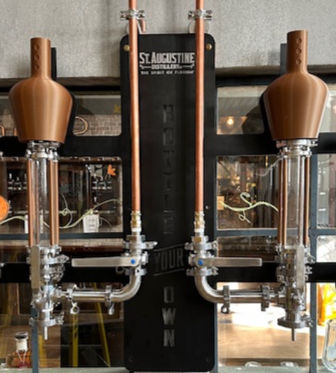
St. Augustine Distillery runs 120+ experiences monthly. They upgraded from a homemade system to a professional DoubleShot setup specifically because demand was outpacing their ability to serve customers efficiently. At that volume, even modest markup percentage generates substantial revenue.
120 bottles × $30 markup = $3,600 per month = $43,200 annually from a single filler system.
BYO Revenue by Experience Type — At a Glance
Standard bourbon/rye ($50 shelf): BYO price $70 · 40% markup · ~$1,400/month at 20 sessions per barrel
Premium single barrel ($80 shelf): BYO price $120–$160 · 50–100% markup · ~$2,400–$3,200/month at 20 sessions
Aged/ultra-premium ($100 shelf): BYO price $160–$200 · 60–100% markup · ~$3,200–$4,000/month at 20 sessions
High-volume walk-up ($45 shelf): BYO price $65 · 44% markup · ~$4,225/month at 65 sessions
The First-Month Revenue Reality
One of our customers—a distillery in Illinois running a DoubleShot system—generated over $13,000 in revenue in their first month of operation.
Let's reverse-engineer how that happened:
Assuming a conservative $80 average transaction (mix of standard and premium bottles):
$13,000 ÷ $80 = 163 bottles sold
163 bottles ÷ 20 days = 8.2 bottles per day
That's entirely achievable for a distillery with regular tour traffic or strong weekend tasting room volume. And that's month one—before word-of-mouth and social media amplification kick in.
Even at more modest volumes:
50 bottles per month × $80 average = $4,000 monthly revenue
$4,000 × 60% margin = $2,400 monthly gross profit
Equipment payback in <2 months
This is why successful BYO programs routinely report 2-4 month ROI, with some high-traffic locations recovering investment in weeks.
Pricing Strategy Framework
When you're setting up your own BYO program, here's how to think about pricing:
Step 1: Establish Your Baseline Markup
Start with 40% above your shelf price for standard expressions. This is psychologically acceptable to customers while delivering meaningful margin improvement.
If your shelf bourbon is $50, price the BYO experience at $70.
Step 2: Adjust for Barrel Characteristics
Add 10-20% for:
Barrel-proof offerings (120+ proof)
Age statements beyond your standard release (8+ years)
Unique or experimental mash bills
Finishing barrels (port, wine, etc.)
That $70 experience becomes $90+ for special barrels.
Step 3: Test Scarcity Pricing
For truly limited or one-off barrels, don't be afraid to test 80-100% markups. The "never again" factor justifies premium pricing for customers who understand whiskey.
Step 4: Create Pricing Tiers
If you're running a DoubleShot (two filling stations), consider offering two price points simultaneously:
Standard barrel: $70
Premium/aged barrel: $100
This gives customers choice while capturing both accessibility and premium segments.
What About Customers Who Balk at Price?
You'll occasionally encounter pushback. "Why is this more expensive than your shelf bottles?"
Here's the framework successful distilleries use to address pricing questions:
Acknowledge the difference: "Great question. You're absolutely right that this is priced higher than our shelf bottles."
Explain the value difference: "What you're getting here is fundamentally different: barrel-proof instead of proofed down, a unique expression that won't exist once this barrel empties, and the experience of filling it yourself."
Emphasize exclusivity: "Our shelf bottles are available year-round at retailers. This specific barrel is only here, only now, and only 200 bottles exist in the world."
Offer the alternative: "If you'd prefer our standard shelf price, we absolutely have those bottles available in our retail area."
The reality: most customers who ask don't need convincing. They're confirming that the premium is justified. Once you explain the value proposition, they proceed.
And here's what distillery owners consistently report: price objections are rare. Far more common is the question "Do you have other barrels available?"—customers wanting more options, not cheaper ones.
The Hidden Revenue Multipliers
The direct margin improvement is just the beginning. BYO programs create additional revenue streams that compound your returns:
Secondary Purchases
Customers who fill a BYO bottle often buy:
Shelf bottles as gifts (they want one to drink, one to keep)
Cocktail glassware and bar tools
Additional BYO bottles to complete a collection
Tour upgrades or whiskey club memberships
One distillery owner told us their average BYO customer transaction—including secondary purchases—runs 30% higher than their average shelf bottle sale.
Repeat Visits
When you rotate barrels, customers come back to see what's new. BYO programs create a reason to return beyond "we're in the area." Some distilleries report BYO customers visiting 3-4 times per year specifically to check barrel availability.
Brand Ambassadors
Every BYO customer photographs the experience and shares it. Your customers become unpaid marketing, generating authentic social proof that drives new traffic. The lifetime value of a BYO customer extends well beyond the initial transaction.
Getting Started: The First 30 Days
If you're ready to capture these margins at your distillery, here's the practical path forward:
Week 1-2: Planning and Pricing
Identify which barrel(s) to feature first
Set initial pricing (40% markup as baseline)
Verify your state ABC regulations allow on-premise BYO sales
Determine space and mounting logistics
Week 3: Equipment and Setup
Order your filling equipment
Prepare barrel rack mounting
Source bottles, corks, and labels
Train staff on operation (takes under 15 minutes)
Week 4: Soft Launch and Refinement
Start with whiskey club members or regulars
Gather feedback on pricing and experience
Document customer reactions for marketing
Adjust as needed before full launch
Week 5+: Full Operation
Integrate into regular tour/tasting room flow
Promote via social media and email
Track volume and revenue
Plan barrel rotation schedule
Most distilleries selling 40+ bottles in their first month follow this timeline. The ones exceeding 80-100 bottles typically have strong existing foot traffic and promote the program heavily at launch.
The Bottom Line
Bottle-your-own programs work because they solve a fundamental challenge in craft distilling: how to improve margins without discounting quality or alienating customers.
The 40-60% markup isn't arbitrary—it reflects genuine value difference between shelf bottles and barrel-strength, experiential purchases. Customers recognize that value and willingly pay for it.
The revenue math is straightforward: $4,000+ additional revenue per barrel, 2-4 month equipment payback, and sustainable margin improvement that compounds as you rotate barrels and build repeat customer base.
Whether you're selling 30 bottles per month or 120, the economic model holds. You're not just selling more whiskey—you're selling whiskey better.
Ready to add a bottle-your-own program to your distillery?
For equipment details, installation guides, and answers to common questions, visit singleshotbarrelworks.com or check out our comprehensive Bottle-Your-Own Program Guide.
Contact us at singleshotbarrelworks@gmail.com or explore our FAQ page for specifics on TTB compliance, space requirements, and program structure options.

Comments